
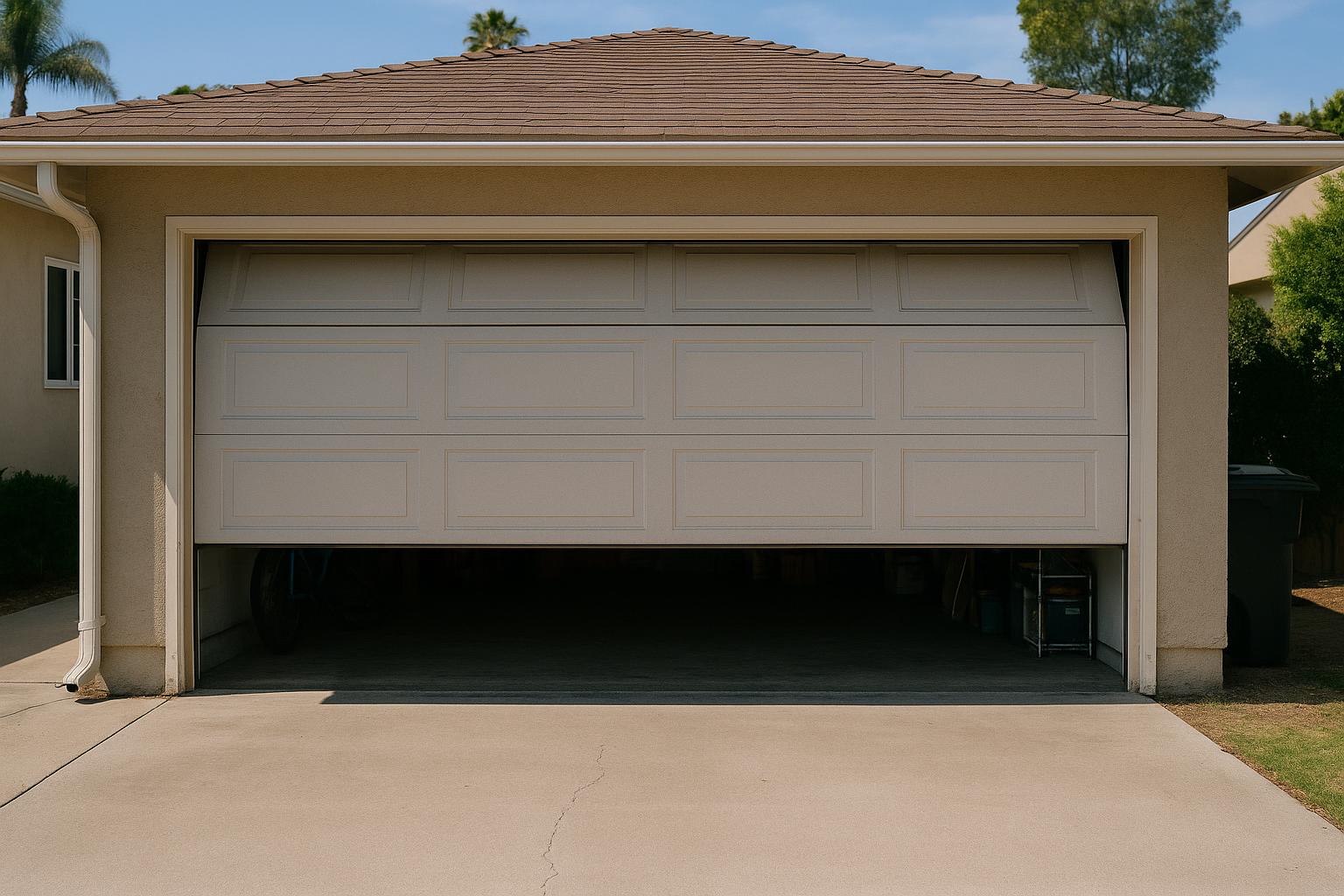
A Common Garage Door Problem in Lodi Homes
You press the button on your garage door remote, watch the door start to close, and then — it stops and reverses right back up. Maybe it happens every time. Maybe it's intermittent. Either way, it's one of the most frustrating garage door problems homeowners in Lodi deal with, especially when you're trying to leave for work or secure your home for the night.
The good news is that this issue usually has a logical explanation. Your garage door opener is designed to reverse when it detects an obstruction or senses something is wrong. That's a safety feature, not a malfunction. But when the door reverses for no apparent reason, it means something in the system needs attention.
Let's walk through the most common causes and what you can do about each one.
1. Misaligned or Dirty Safety Sensors
This is the number one reason garage doors reverse before reaching the floor. Every modern garage door opener has two photo-eye sensors mounted near the bottom of the door tracks, one on each side. These sensors send an invisible beam across the opening. If anything breaks that beam — a trash can, a bicycle, a leaf — the door will reverse to prevent crushing whatever is in the way.
Over time, these sensors can become misaligned from being bumped, or the lenses can get dirty from dust, cobwebs, and the general grime that accumulates in a Lodi garage, especially during the dry summer months when dust is everywhere.
What to Try
- Check that both sensor lights are lit and steady. A blinking light usually indicates misalignment.
- Wipe the sensor lenses gently with a soft cloth.
- Make sure nothing is blocking the beam between the two sensors.
- Check that the sensors are pointed directly at each other. Even a small shift can cause problems.
If cleaning and adjusting doesn't solve the issue, the sensors or their wiring may need to be replaced.
2. Incorrect Close-Limit Settings
Your garage door opener has limit settings that tell it how far the door should travel before it's fully open or fully closed. If the close-limit setting is off, the opener may think the door has hit an obstruction when it's actually just reaching the floor. The opener interprets the resistance as a problem and reverses the door.
What to Try
- Consult your opener's manual for instructions on adjusting the close-limit switch. On most models, it involves turning a small screw on the back or side of the motor unit.
- Make small adjustments and test the door after each one.
If you're not comfortable making these adjustments yourself, this is a quick fix for a garage door technician. Incorrect settings can also put unnecessary strain on your opener motor, so it's worth getting right.
3. Worn or Damaged Tracks
The metal tracks that guide your garage door up and down need to be straight, clean, and properly aligned. If a track is bent, has debris stuck in it, or has come loose from the wall, the door can bind or stick as it moves. When the opener encounters that extra resistance, it reverses.
What to Try
- Visually inspect both tracks from top to bottom. Look for dents, bends, or gaps between the track and the wall.
- Clear out any debris, dirt, or small objects that may have gotten into the tracks.
- Tighten any loose brackets or bolts holding the tracks in place.
If a track is significantly bent, don't try to hammer it back into shape. You could make the problem worse or create a safety hazard. A professional can either straighten or replace the track safely.
4. Problems with the Garage Door Opener Logic Board
The logic board is essentially the brain of your garage door opener. Like any electronic component, it can develop glitches or fail over time. If the logic board is malfunctioning, it may send incorrect signals that cause the door to reverse even when everything else is working perfectly.
This is harder to diagnose on your own. If you've ruled out sensors, limit settings, and track issues, a faulty logic board could be the culprit. A garage door technician can test the board and replace it if necessary, which is typically more affordable than replacing the entire opener.
5. Broken or Worn Cables and Rollers
Your garage door relies on cables, rollers, and hinges to move smoothly. When rollers wear out or cables start to fray, the door doesn't travel as smoothly as it should. The extra friction and resistance can trigger the opener's auto-reverse feature.
Listen to your door as it operates. Grinding, scraping, or squealing noises are signs that rollers or other hardware may need to be replaced. Worn nylon rollers are a common issue, and upgrading to higher-quality rollers can make your door significantly quieter and smoother.
6. The Door Itself Is the Problem
Sometimes the issue isn't the opener or the hardware — it's the door. Wooden garage doors, which are common in older Lodi neighborhoods, can warp or swell with changes in humidity and temperature. A warped door panel can create enough resistance to trigger a reversal. Similarly, if a panel is cracked or damaged, the door's balance can be thrown off.
If your door is old, warped, or damaged beyond practical repair, it may be time to consider a replacement. Modern insulated steel doors are durable, energy-efficient, and virtually maintenance-free — a worthwhile upgrade for any home.
When to Call a Professional
Some of these fixes are simple enough for a handy homeowner to tackle. Cleaning sensors and clearing debris from tracks are safe, straightforward tasks. But anything involving springs, cables, track realignment, or electrical components should be handled by a trained technician. Garage doors are heavy — a standard two-car door can weigh over 200 pounds — and the components that support that weight are under significant tension.
At Lodi Garage Door, we see reversing issues regularly, and in most cases, we can diagnose and fix the problem in a single visit. Whether it's a sensor adjustment, a limit setting correction, or a more involved repair, we'll give you an honest assessment and a fair price.
Don't Ignore a Reversing Garage Door
A garage door that won't close all the way isn't just annoying — it's a security risk. An open or partially closed garage is an invitation for theft, pests, and weather damage. If your door has been reversing and you can't figure out why, don't keep pressing the button and hoping for the best.
Give us a call or reach out online. We serve homeowners throughout Lodi, Stockton, Galt, Woodbridge, and the surrounding areas, and we're happy to take a look and get your door working the way it should.