
Your Garage Door Shouldn't Sound Like That
You press the button, and instead of a smooth, quiet operation, your garage door greets you with a symphony of grinding, squealing, popping, or rattling. If you're a homeowner in Lodi, you've probably gotten so used to the noise that you barely notice it anymore. But here's the thing — a noisy garage door is almost always trying to tell you something, and ignoring it can lead to more expensive repairs down the road.
In this guide, we'll walk through the most common garage door noises, what causes them, and what you can do about each one. Some fixes are simple DIY tasks, while others are best left to a professional.
Squealing or Screeching Sounds
A high-pitched squeal when your garage door opens or closes is one of the most common complaints we hear from homeowners. This sound usually points to one of two issues:
- Lack of lubrication: Metal parts rubbing against each other without proper lubrication will create a loud squealing noise. The rollers, hinges, and tracks all need periodic lubrication to operate smoothly.
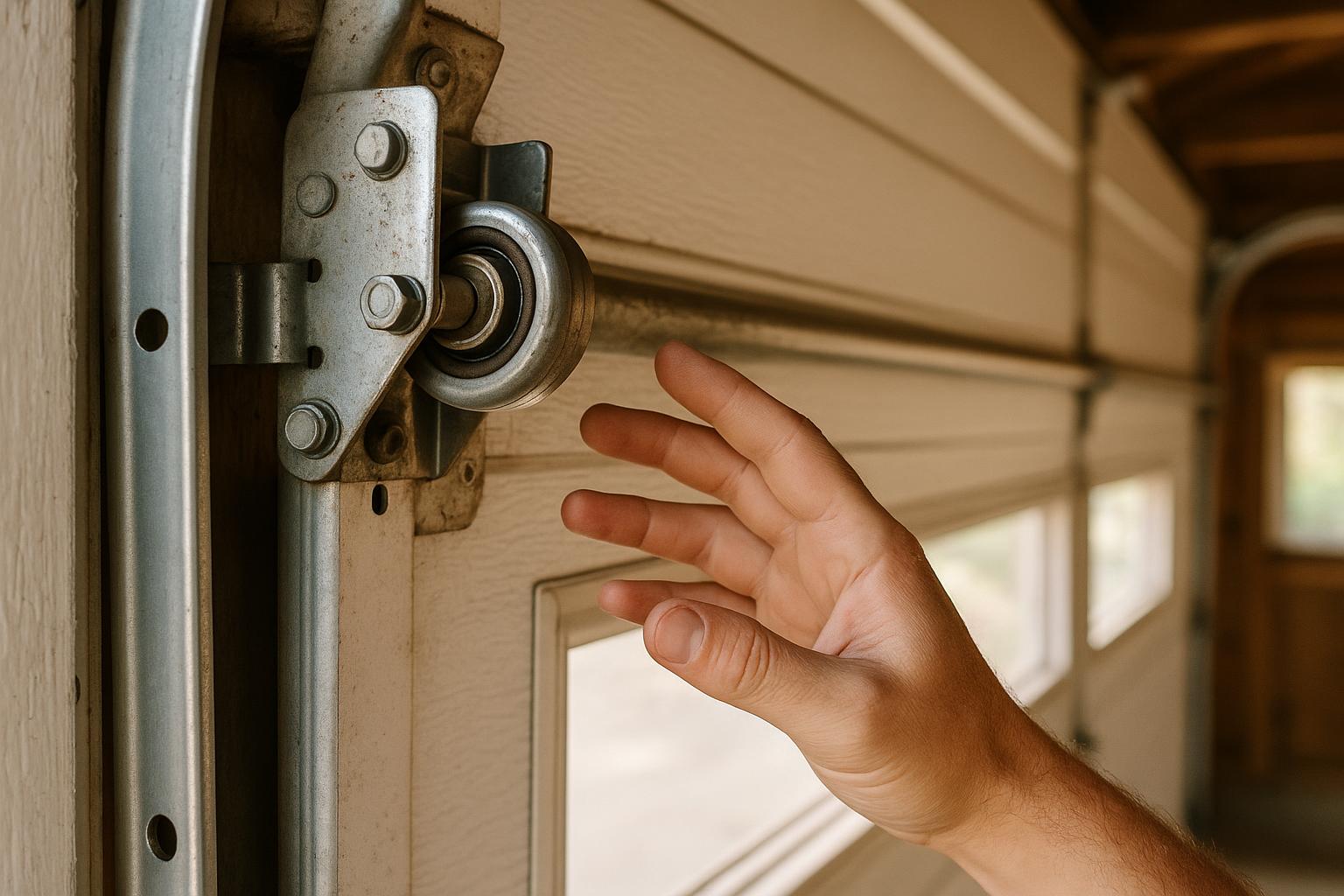
- Worn-out rollers: If your door uses metal rollers, they wear down over time and begin to scrape against the track. Nylon rollers are quieter and last longer, making them a popular upgrade for Lodi homeowners looking for a quieter door.
What You Can Do
Start by applying a garage door-specific lubricant (not WD-40, which is a solvent, not a lubricant) to the rollers, hinges, springs, and bearing plates. If the noise persists after lubrication, the rollers likely need to be replaced. A garage door technician can swap them out quickly and affordably.
Grinding or Scraping Noises
A grinding sound is harder to ignore and usually signals a more serious issue. Common causes include:
- Misaligned tracks: If the vertical or horizontal tracks have shifted even slightly, the door will scrape against them as it moves. You might also notice the door moving unevenly or getting stuck partway.
- Damaged rollers or track: Dented tracks or cracked rollers can cause the door to grind as it travels. Over time, this worsens and can cause the door to jump off the track entirely.
- Opener gear issues: If the grinding seems to come from the motor unit on the ceiling rather than the door itself, the gear inside your garage door opener may be stripped or wearing out.
What You Can Do
Visually inspect the tracks for dents, gaps, or misalignment. If you see obvious damage, avoid using the door and call a professional. Track adjustments and opener gear replacements involve components under tension or electrical connections that can be dangerous to work on without the right tools and training.
Banging or Slamming Sounds
If your garage door slams down the last foot or two instead of closing gently, something is off with the balance or the closing mechanism. This is especially common in older homes around Lodi where garage doors and openers have been in service for 15 or 20 years.
- Broken or weakened springs: When torsion or extension springs lose tension, they can no longer counterbalance the weight of the door. The opener is forced to do all the heavy lifting, and the door drops hard at the end of its travel.
- Opener settings need adjustment: The force and travel limit settings on your opener control how fast and how far the door moves. If these are miscalibrated, the door may close too aggressively.
What You Can Do
If the door feels noticeably heavier when you lift it manually (with the opener disengaged), the springs are likely the issue. Spring replacement is a job for a trained technician — the tension involved makes it genuinely dangerous for DIY attempts. If the springs seem fine, adjusting the opener's close force and down travel limit may solve the problem. Check your opener's manual for instructions, or have a pro handle the calibration.
Rattling or Vibrating Sounds
A rattling noise during operation often sounds alarming but is frequently one of the easiest problems to fix. Common culprits include:
- Loose hardware: The constant vibration of daily use gradually loosens nuts, bolts, and screws on the door panels, tracks, and brackets. A loose chain on a chain-drive opener can also rattle loudly.
- Loose opener mounting: If the opener unit itself isn't securely fastened to the ceiling, the entire assembly can vibrate and create a rattling echo throughout your garage.
What You Can Do
Grab a socket wrench and tighten all the bolts and screws you can see on the brackets, track mounts, and hinges. Check the chain tension on your opener if applicable — it should have about a half inch of play at the midpoint. If the opener is vibrating on the ceiling, make sure the mounting bracket and straps are secure. You can also install a vibration isolation kit to dampen the noise.
Popping or Clicking Sounds
A single loud pop when the door starts moving is often related to the torsion spring shifting on the bar or a section of weatherstripping pulling free and snapping back. Repetitive clicking, on the other hand, may indicate:
- A damaged or misaligned safety sensor: The photo-eye sensors at the base of the door frame can cause the opener to click repeatedly if they're blocked, dirty, or out of alignment.
- A worn opener drive: Clicking from the motor unit can mean the drive sprocket or logic board is starting to fail.
What You Can Do
Clean the sensor lenses with a soft cloth and make sure both sensors are aligned so their indicator lights are steady. For clicking that comes from the opener motor itself, it's best to have a technician diagnose the issue before the opener fails completely.
When to Call a Professional
Some garage door noises are easy to address on your own with a can of lubricant and a wrench. But if you're dealing with grinding from the tracks, banging from failing springs, or persistent sounds you can't pinpoint, it's time to call in a pro.
At Lodi Garage Door, we troubleshoot noisy garage doors every week for homeowners across Lodi, Stockton, Galt, and the surrounding communities. We'll identify exactly what's causing the noise, explain your options clearly, and fix the problem so your door runs the way it should — quietly and reliably.
Don't Wait Until the Noise Becomes a Breakdown
Strange sounds are your garage door's early warning system. Addressing them now with a quick inspection or maintenance visit can save you from a much more expensive repair later. If your garage door has been getting louder and you're not sure why, give us a call or schedule a service appointment. We'll get it sorted out so you can open and close your door without waking up the whole neighborhood.