
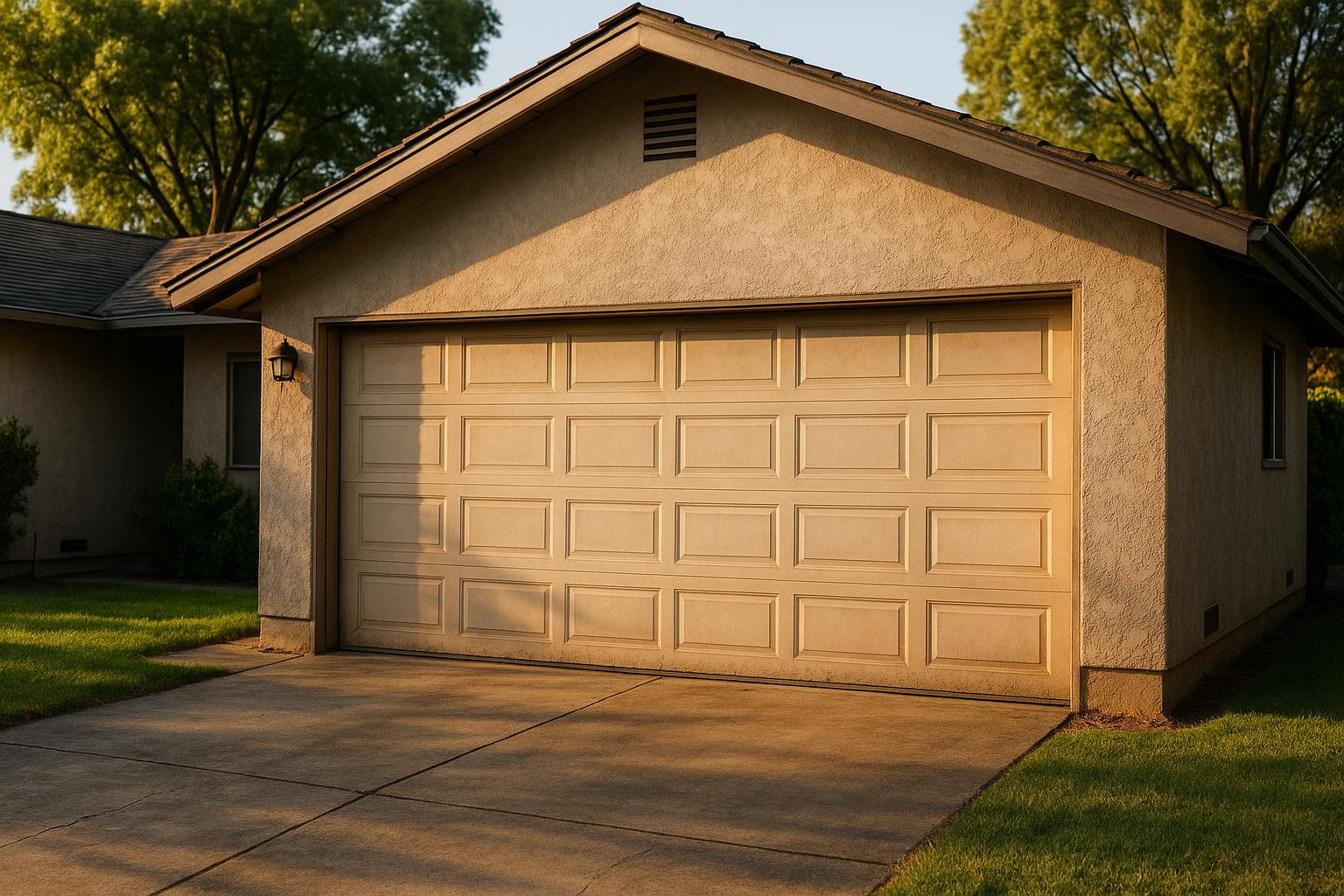
Your Garage Door Won't Last Forever — Here's What to Expect
Your garage door is one of the hardest-working parts of your home. If you use it as your main entry point — and most homeowners in Lodi do — it opens and closes an average of three to five times a day. That's over a thousand cycles per year, and every single one puts wear on the panels, hardware, springs, and opener.
So how long should a garage door actually last? And how do you know when repairs stop making sense and a full replacement is the smarter move? Let's break it down.
Average Lifespan of a Garage Door
Most residential garage doors are built to last 15 to 30 years, depending on the material, quality of installation, climate exposure, and how well they've been maintained. Here's a general breakdown by material:
- Steel garage doors: 20–30 years. Steel is the most popular choice in the Central Valley and holds up well in our warm, dry climate. Higher-gauge steel with insulation tends to last longer.
- Wood garage doors: 15–20 years. Wood looks beautiful but requires more upkeep. Heat, moisture fluctuations, and sun exposure can cause warping, cracking, and rot over time.
- Aluminum garage doors: 15–25 years. Lightweight and resistant to rust, but more prone to dents and dings than steel.
- Fiberglass or vinyl garage doors: 15–20 years. These resist denting and don't rust, but fiberglass can become brittle and crack with age, especially with prolonged sun exposure.
Keep in mind that these are estimates. A well-maintained steel door on a home in Lodi could easily push past 25 years, while a neglected wood door might start failing in under 15.
Factors That Shorten Your Garage Door's Lifespan
Several things can cause your garage door to wear out faster than expected:
Lack of Maintenance
Skipping regular maintenance is the number one reason garage doors fail prematurely. Lubricating moving parts, tightening hardware, and checking the balance of the door are simple tasks that dramatically extend its life. Many homeowners don't think about their garage door until something breaks.
Extreme Heat and Sun Exposure
Here in the Lodi area, summer temperatures regularly climb above 100°F. That kind of heat takes a toll on weatherstripping, seals, and certain door materials. West-facing garage doors get the worst of it, with direct afternoon sun baking the panels for hours every day.
Frequent Use
A family with multiple drivers going in and out several times a day will put significantly more cycles on a garage door than a retired couple who uses theirs once or twice daily. More cycles mean faster wear on every component.
Poor Installation
A garage door that wasn't installed correctly from the start will never perform as well or last as long as one that was. Misaligned tracks, improperly tensioned springs, and unbalanced doors create uneven stress that accelerates wear.
Impact Damage
Accidents happen — a basketball, a bicycle, or a car bumper can dent or crack panels. Even minor damage can compromise the door's structural integrity and insulation over time.
7 Signs It's Time to Replace Your Garage Door
Repairs can solve a lot of problems, but there comes a point where replacing the entire door is the better investment. Here are the signs to watch for:
- Frequent breakdowns. If you're calling for repairs multiple times a year, those costs add up quickly. A new door eliminates the cycle of recurring fixes.
- Visible sagging or warping. Disconnect your opener and manually lift the door halfway. If it doesn't stay in place or looks visibly uneven, the door's structural integrity is compromised.
- Significant rust or rot. Surface rust on steel doors can sometimes be addressed, but when rust eats through panels or wood rot spreads deep into the structure, replacement is the only real fix.
- Outdated safety features. Garage doors manufactured before 1993 may lack auto-reverse mechanisms and photoelectric sensors that are now standard. If your door doesn't have these features, replacing it is a safety priority — especially if you have children or pets.
- Rising energy bills. Older, uninsulated garage doors let heat pour into your garage during Lodi's hot summers, making your HVAC system work harder. A modern insulated door can make a noticeable difference in energy efficiency.
- Excessive noise and shaking. Some noise is normal, but if your door shakes violently or sounds like it's struggling through every cycle, the panels, tracks, or rollers may be worn beyond practical repair.
- Outdated appearance. Your garage door accounts for up to 40% of your home's curb appeal. If it looks dated, faded, or beaten up, a new door is one of the best home improvement investments you can make. In fact, garage door replacement consistently ranks among the top projects for return on investment at resale.
Repair vs. Replace: A Simple Rule of Thumb
Here's a practical guideline we share with homeowners: if your garage door is over 15 years old and the repair estimate is more than half the cost of a new door, replacement usually makes more sense. You'll get a warranty, improved energy efficiency, better safety features, and a fresh look — all at once.
For newer doors with isolated issues — a single broken spring, a malfunctioning opener, or a damaged panel — repair is almost always the right call. The key is getting an honest assessment from someone who isn't trying to upsell you.
What to Look for in a Replacement Garage Door
If you've decided it's time for a new door, here are a few things worth considering:
- Insulation: Look for doors with polyurethane or polystyrene insulation, especially in our climate. An insulated door keeps your garage cooler in summer and can reduce energy costs.
- Material: Steel remains the most durable and low-maintenance option for most homes in the Central Valley. If you love the look of wood, consider a steel door with a wood-grain finish — you get the aesthetics without the upkeep.
- Wind resistance: While Lodi doesn't face hurricanes, we do get strong wind events. A reinforced door holds up better over time.
- Style and color: Modern garage doors come in a wide range of designs, from traditional raised-panel to sleek contemporary styles. Choose something that complements your home's architecture.
Get an Honest Opinion from a Local Pro
At Lodi Garage Door, we never push a replacement when a repair will do the job. And when replacement truly is the better option, we'll explain exactly why and walk you through your choices without any pressure.
If your garage door is aging and you're not sure whether to keep repairing it or invest in something new, give us a call. We serve homeowners throughout Lodi, Stockton, Galt, Woodbridge, Acampo, and Lockeford with straightforward advice and quality workmanship. We'll take a look, give you our honest recommendation, and let you decide what's right for your home and budget.